Varda Caivano's Doubt
An essay on the paintings of Varda Caivano

If many painters dazzle us through their virtuosity, fewer do so through the practice of hesitation. It is often removed from the picture’s surface like the remnants of a house party before the parents come home; and in many cases, it is skillfully avoided altogether. Fewer imbricate their hesitation into a painting, letting it openly trip over itself until it coheres. This is the opposite of a fast food experience, a slowing of our registration through innumerable hesitations, stutters, and hiccups that ultimately—if we embrace their ungainliness—are forceful and persuasive. Varda Caivano is a key practitioner in this way of working.
By virtue of her ostensibly casual and modestly-scaled work, she is a quiet giant of contemporary painting, a world which tends to favor the grand and familiar; so it is not surprising that her paintings can be easily missed in the scrum for attention. This is not to say that they haven’t been already the subject of fanfare in various corners of the art world, but because they are understated, nor are particularly open about their references or allusions, we have to work more than usual to register what it is they offer; and what it is they offer, aside from visual pleasure, is very difficult to articulate, much like how music frustrates our attempts at description.
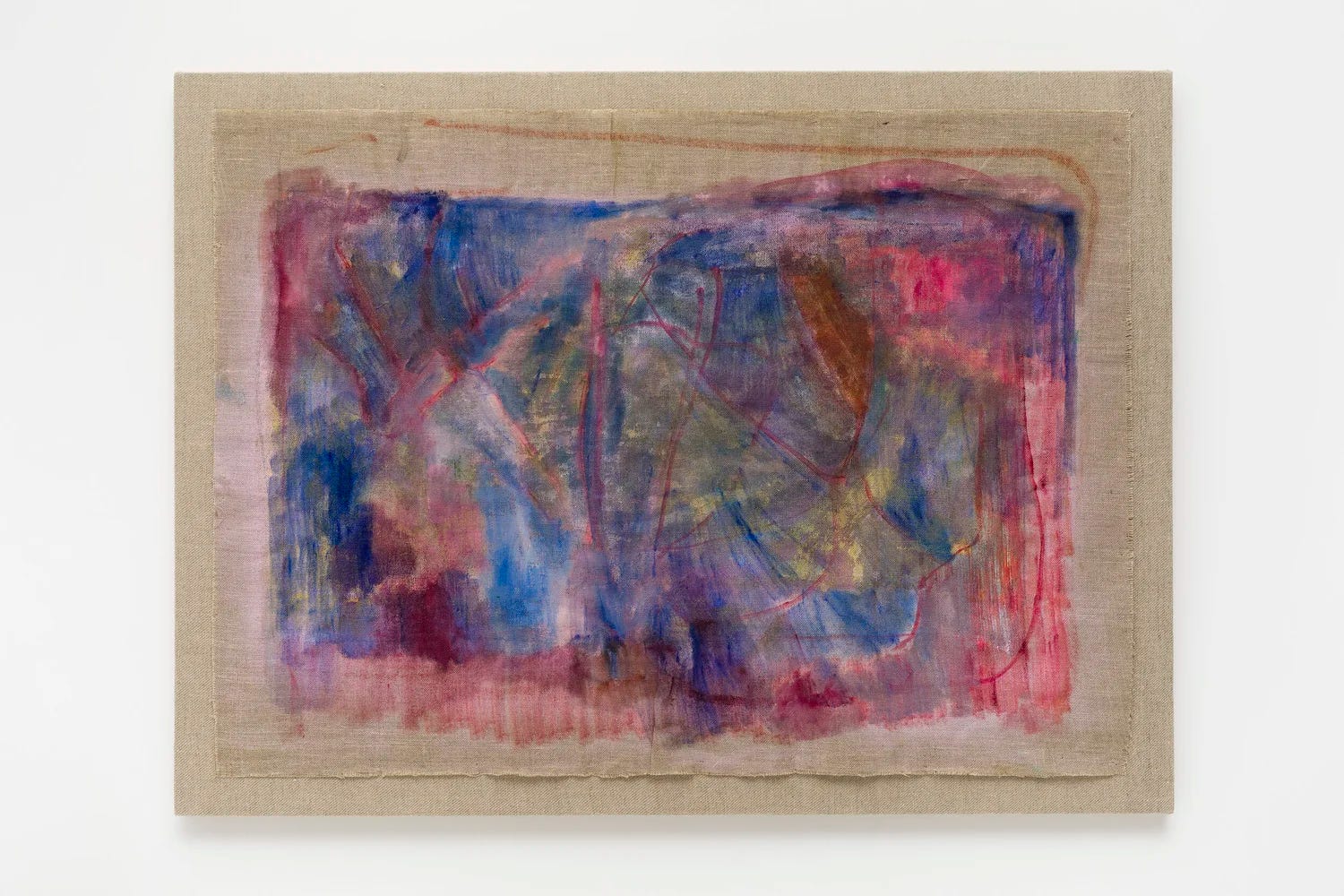
So it is no coincidence that Caivano’s paintings are musical in nature. She uses tone, line, color harmony, space, sheen, texture, and various types of mark-making as correlates to timbre, melody, rhythm, phrasing, and tempo. Unlike Kandinsky, whose paintings spill into visual operatics, Caivano prefers a more intimate stance. As in experimental music, she often works within a narrow set of parameters—using only one or two colors, for instance, or painting and drawing on one side of the woven support before building on the seeped-through marks on its reverse side—not unlike the way studio equipment filters and alters a performance in the act of recording
Literary correlations also abound: Caivano has cited George Perec, an OuLiPo novelist fond of puzzles and writing constraints, perhaps most known for penning an entire novel without the letter e; and who, with exacting detail, lovingly described everyday objects and activities—like sitting in a park, handing a movie ticket to an usher, or washing a dish. For him, this was the real stuff of life. Caivano is sensitive to such minutiae, the things in and around what she does to a painting, in all of her moods and circumstances. She knows that these actions naturally densify and interconnect over time, unfolding without prescriptions, seemingly precluding conceptual thought; but as Theodor Adorno in Minima Moralia wrote,
thinking itself is always a form of behavior; it is, whether it likes it or not, a kind of practice. . . and once thinking sets out in its purest form to bring about change in even the smallest thing, no power on earth can separate theory from practice in an absolute way.
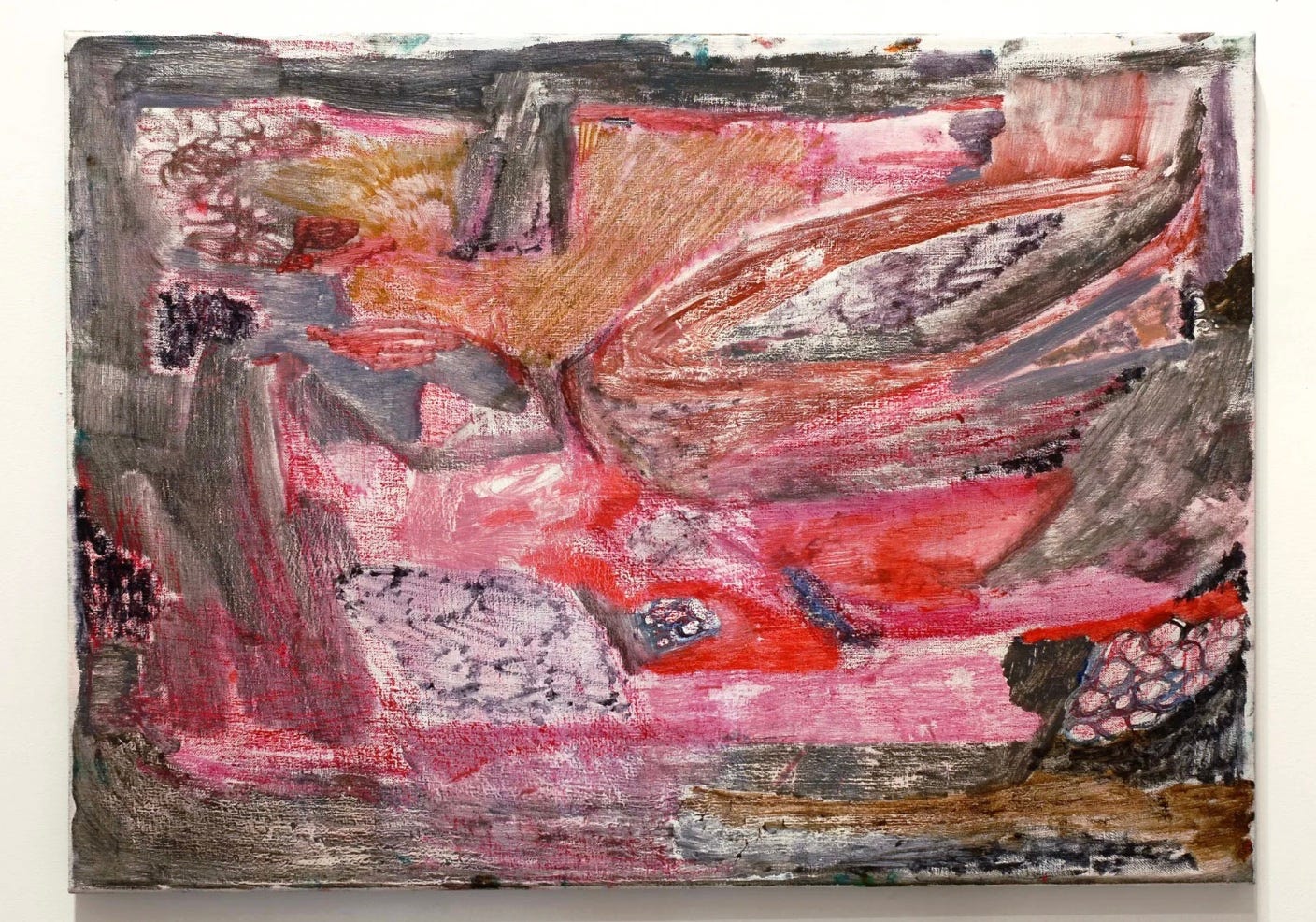
So if doing and thinking are inextricably bound, if the hand is an extension of the mind, an “expression and continuation of a thought”, wrote Balzac, what kinds of thoughts are endemic to Caivano’s work? The tentative thought, the “what if” thought, the “maybe this” thought, all of which when concretized in paint—layered, connected, and accrued—results in a paradoxically forceful argument that doubt adds up to something, a conviction even; and that conviction is itself fugitive, subject to speculation, but also serves as the artist’s inner-compass. That good painting can emerge from this paradox, being both provisional and convictive, reflects the richness of thought that shaped its making. Perhaps that is what strikes at the heart of what makes Caivano’s work so elusive, even aloof: they’re as much the result of physical labor with colored paste and supports as much as they are evidence of a very private thought process that betrays very little of its motives, yet is so affecting all the same.
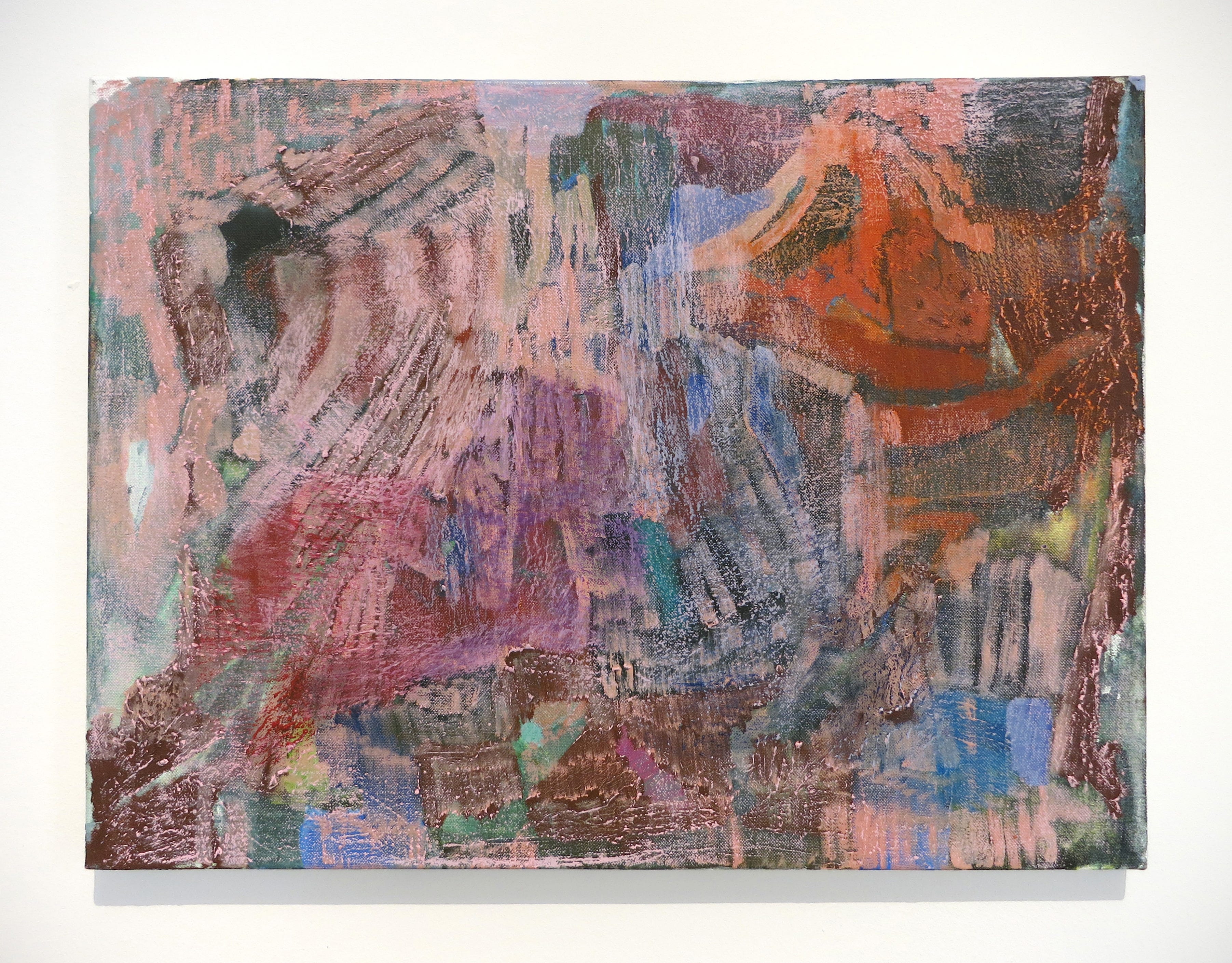
Which leads to my curiosity about how instrumental music affects us, an aural experience that bypasses language. Arthur Schopenhauer argued that music, unlike any other art form, is the direct expression of the will—the ineffable striving force underlying all life and matter. For him, painting, architecture, and sculpture can only represent the will through organic form. At the height of engagement with such representations, the viewer is “delivered from the miserable pressure of the will,” he wrote, momentarily ending all personal striving; one can sit in contemplation without personal desire, but the moment cannot hold for long before it returns, attaching itself to, and even distorting the painting’s representations in accord with its whims.
Following Schopenhauer’s logic, non-objective painting, which did not yet technically exist in his lifetime, would act as a ballast against the pressure of desire. Because its forms do not necessarily represent the world—though modernist painters like Ellsworth Kelly might dispute this—they are closer to the expression of the will through tone, color, space, and other pictorial properties. Caivano’s paintings appear to occupy this sector of abstraction, even while the line between it and representational painting are ultimately false (every picture is an abstraction of life). So to be the devil’s advocate, one could argue that there are vestiges of represented life in Caivano’s paintings, that they derive from her sensory and memory-encoded experience, even if they frustrate conventional representation. They occasionally suggest recognizable objects, like the textures of vegetation, the night sky, or the receding planes of a landscape, but ultimately demure from certifying that they are referring to those things at all (her paintings are untitled). It only seems certain that they represent a way of being and thinking, of painting a painting, that is bound with hesitation.
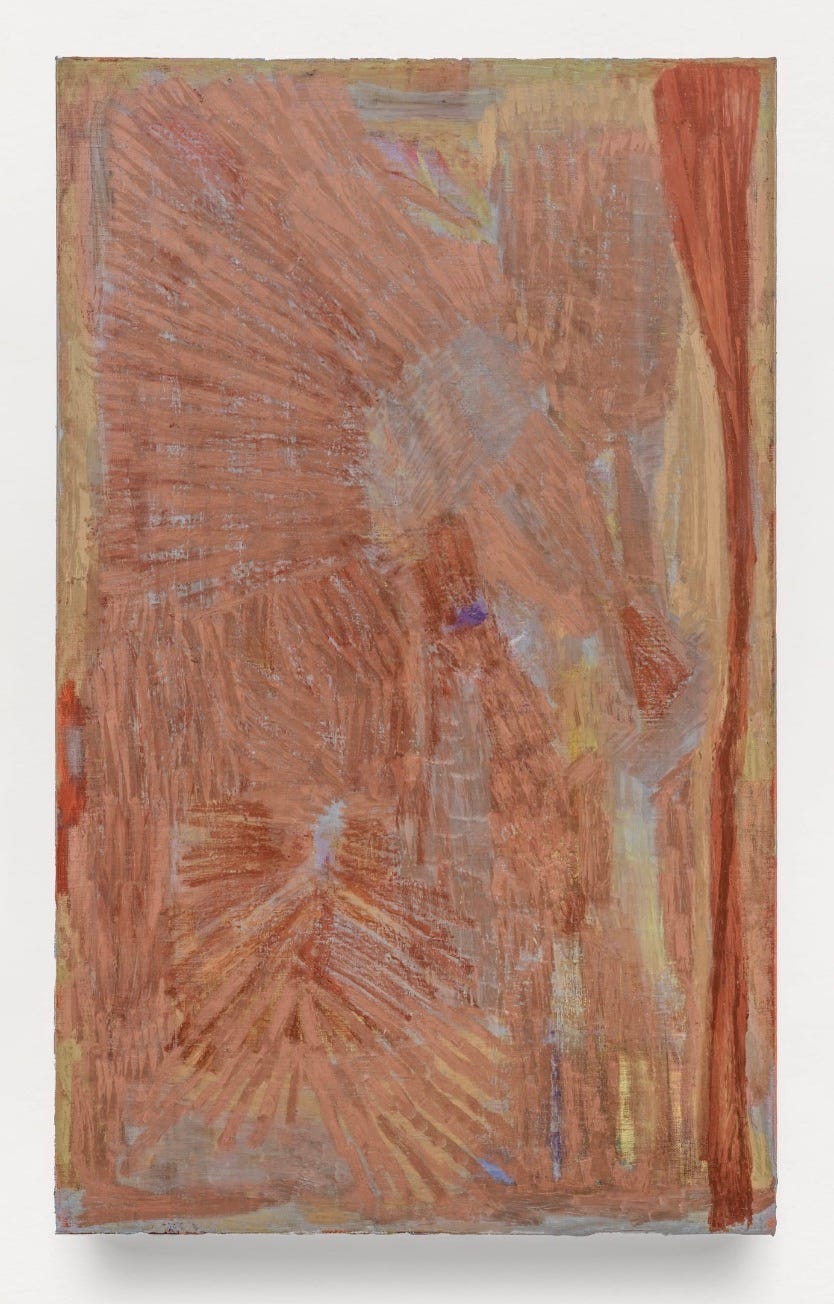
Thelonious Monk, his solo piano recordings in particular, embody the aesthetics of hesitation without rival. Rife with awkward phrasing, “wrong” notes, angular rhythms, dis- and misplaced accents, and off- kilter silences, his playing defies conventional notions of virtuosity, which traditionally prize speed, fluidity, and accuracy. These qualities seduce us because they denote learnedness, discipline, and negative capability. When Glenn Gould’s playing virtually merged into machine-like perfection, what he appeared to be advocating for is an aesthetic of certainty.
That Monk’s music manages to be seductive without adhering to such values renders him antagonistic to certainty. His art is a type of musical stuttering—a space of durational tension in which he’s engaged in a process of remembering and redescription of how his composition could be played in real time, which triggers new iterations of the original. The basis of all jazz improvisation is, to some extent, performatively departing from the standard form of the composition into “free expression”, but with Monk, he seems to include his own doubts as to whether the next step is correct through his use of accents and timing. Caivano makes analogous marks with paint, making awkward, gawky passages that seem to suggest she’s in unfamiliar territory.
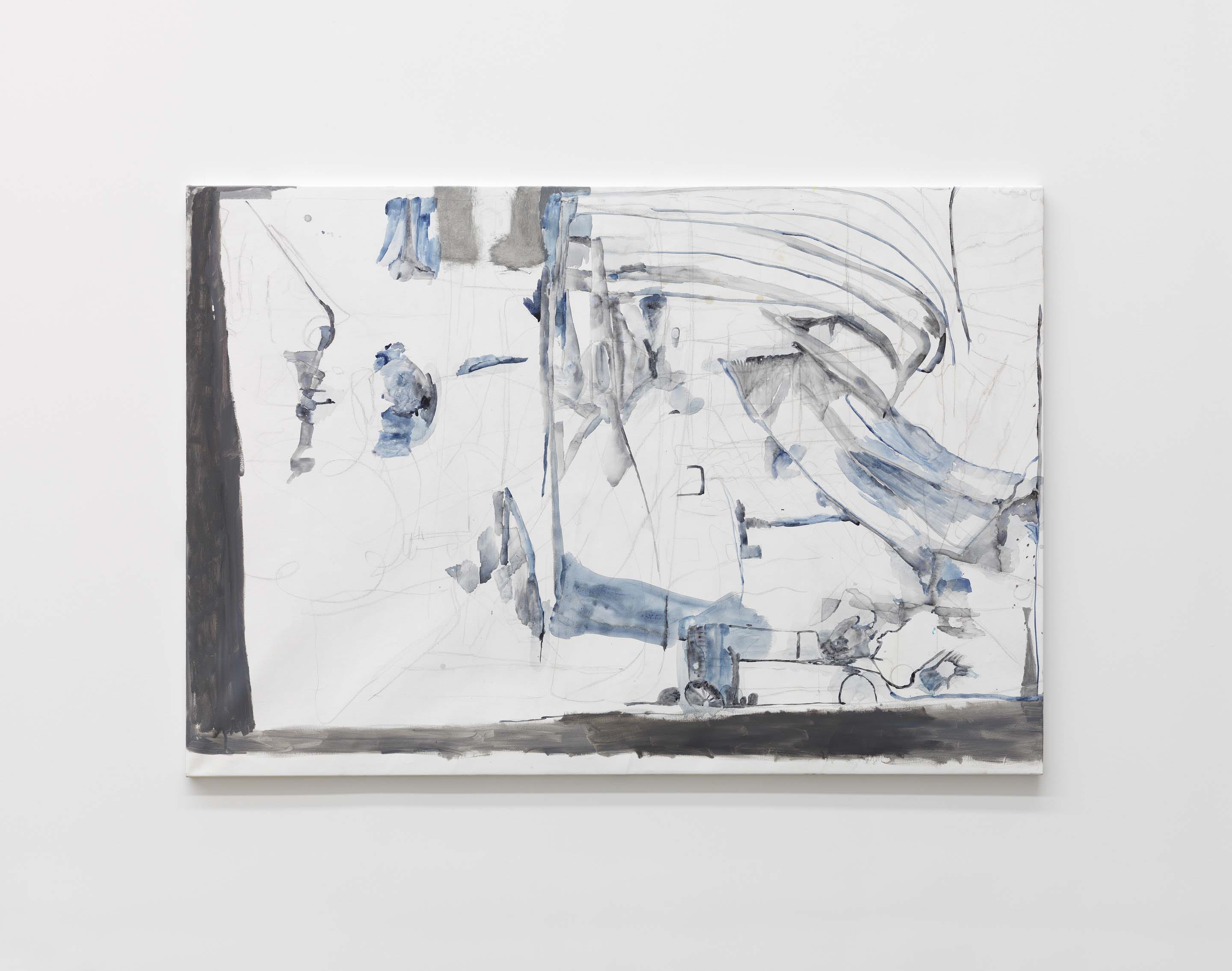
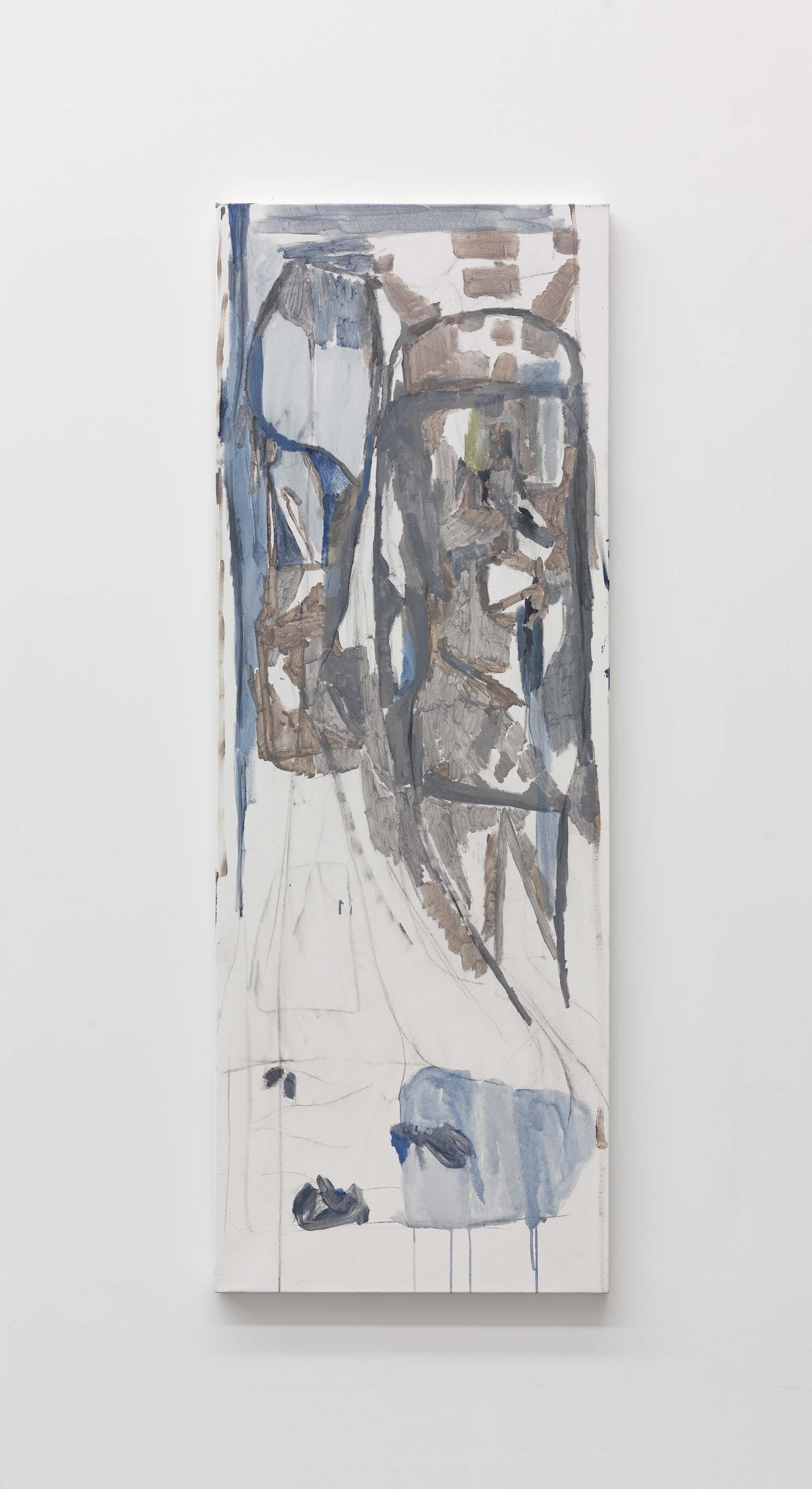
For her 2015 solo exhibition at the Renaissance Society in Chicago, Caivano largely reduced her palette to greys, blacks, umbers, muted blues, often leaving large expanses of white ground over which she lightly sketched wandering lines of charcoal that suggest pictorial structures in mental and physical infancy. If the white ground’s charcoal notations signify ‘unfinished structure’ or ‘provisional ideas’, they also suggest that the image holds other possibilities in its reserves, that they are literally and figuratively lines of possibility, inviting us to fill them in with our minds as an act of co-creation. Which is to say, they invite us to mentally elaborate on her painting, like how we might mentally fill in the blanks in a text or image.
In Caivano’s best work, we see her slowly wandering through pictorial space as if she had never quite never done so before. Maurice Merleau-Ponty posited that Paul Cezanne was “the first man [who] spoke and painted as if no one had ever painted before,” that what he “expresse[d] cannot, therefore, be the translation of a clearly defined thought, since such clear thoughts are those that have already been said within ourselves or by others.” Similarly Caivano embraces her own lack of clarity in her thinking and doing; she expresses—or, to be less charitable in the Schopenhaurian sense—represents her thinking through paint; she is unafraid to expose her process of doubt, openly certain about her uncertainty.
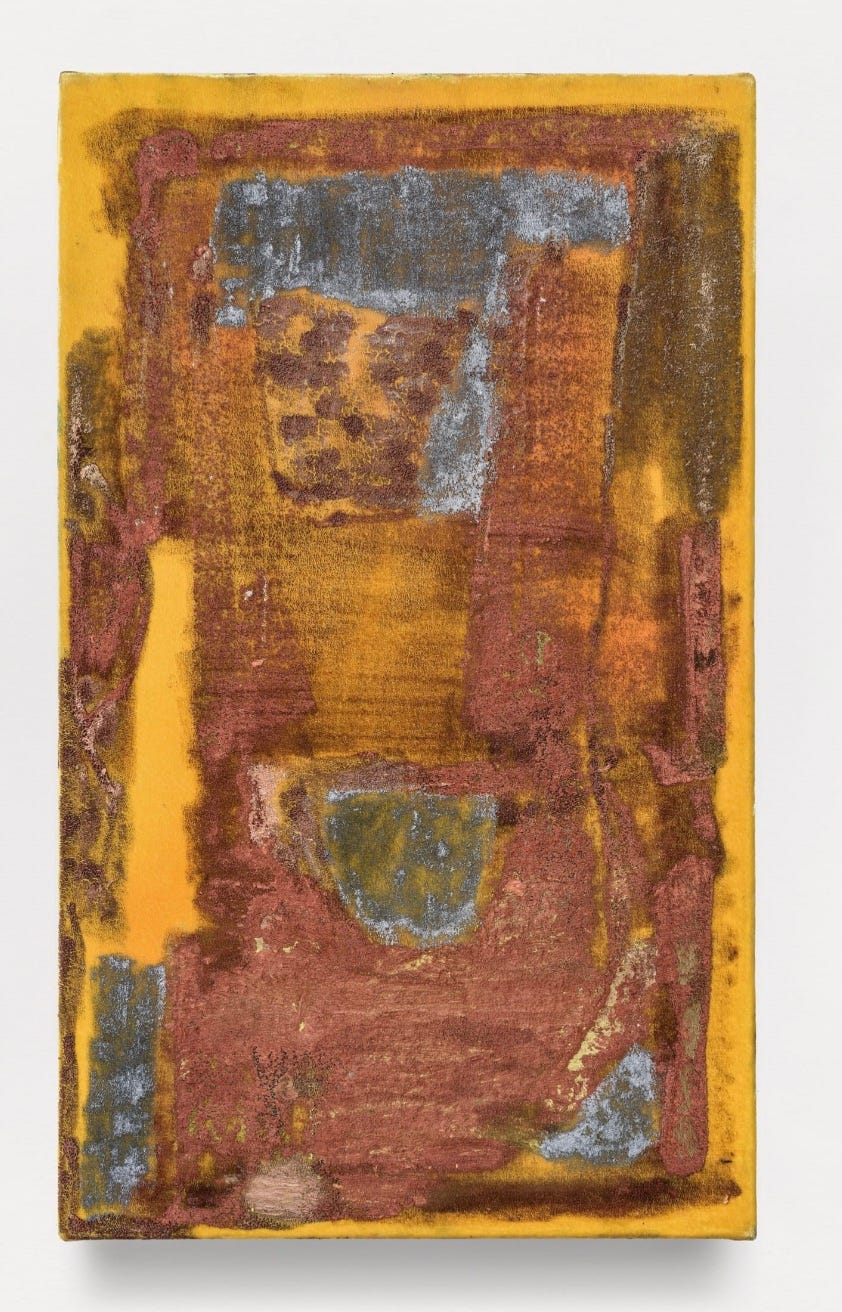
For her most recent exhibition at Mendes Wood, New York entitled Nocturnal Music, she painted several works on velvet, a fabric featuring a dense pile of fibers that catches light in many directions. Each brushstroke, depending on the direction she deployed it, found either a shiny or matte surface, throwing a wiggly variability into the painting process otherwise limited with traditional supports. Her intentionality has thus been somewhat upended by the ground, for the light generated by the color bounces at the eye various and unpredictable ways. As with any technique and material, with enough time she could have made reasonable predictions of such material interactions, but one gets the sense that Caivano is far from interested in reaching that place. She will continue to infuse unfamiliar variables into her practice, starting anew with each painting and each body of work. It takes a certain amount of ego strength to willfully stay in this zone and to trust the viewer will follow along, and often, to her credit, they do.
Because the world generally resists—even abhors—uncertainty in all of its forms, Caivano has carved out a sui generis aesthetic: a practice built less on technical innovation than a novel sensibility that rewards the refusal of haste and recognizes hesitation as a form of integrity.
So glad you appreciate Varda's elusive art.
Beautiful work Max-y! Never knew her !